

In the era of generative AI, we are seeing an explosion of new startups led by technically elite and operationally seasoned founders. But where exactly do these founders come from? What kinds of schools did they attend? Which companies shaped their early careers?
At SVTR.AI, we analyzed the backgrounds of hundreds of founders behind today’s most heavily funded AI companies. The results reveal powerful patterns across both education and professional experience.
Part I: The Education Factor
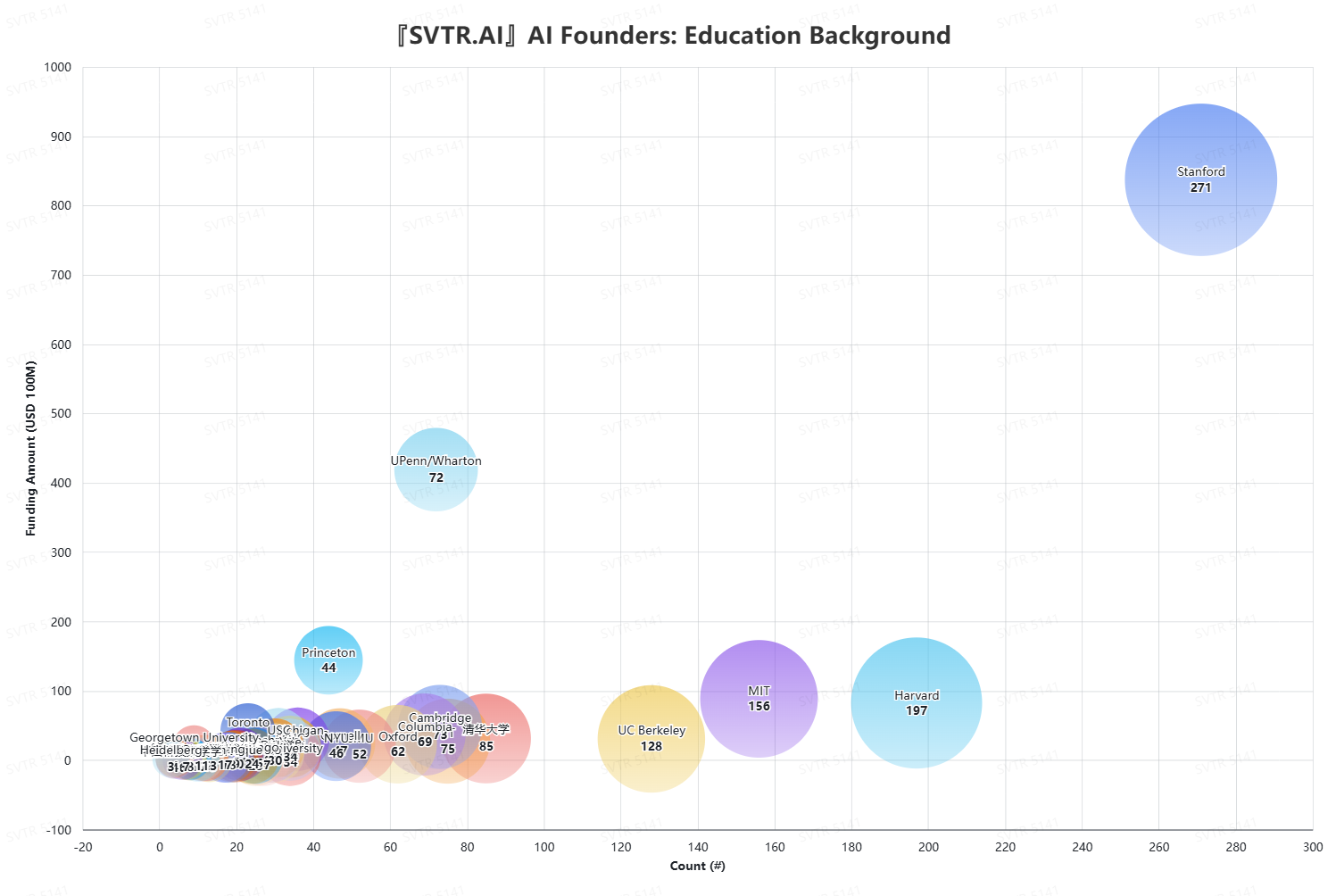
Stanford leads—but Wharton surprises
In terms of founder education, elite U.S. institutions dominate. Stanford stands out as the clear #1, with 271 AI founders who collectively raised over $90 billion USD. MIT, Harvard, and UC Berkeley round out the top tier.
Interestingly, Wharton/UPenn, despite a smaller number of founders (72), is associated with more than $40 billion USD in startup funding—a strong indicator that business school alumni are excelling at capital-intensive growth.
Meanwhile, Tsinghua University represents the top non-U.S. institution on the list, contributing 85 founders and over $15 billion in total funding.
UniversityFoundersFunding Raised (USD)Stanford271$90B+Harvard197$40B+MIT156$30B+UC Berkeley128$20B+UPenn / Wharton72$40B+Tsinghua University85$15B+
🧠 Insight: Educational pedigree isn't just academic—it's a trust signal to investors, especially in high-risk, high-reward AI ventures.
Part II: The Corporate Training Grounds
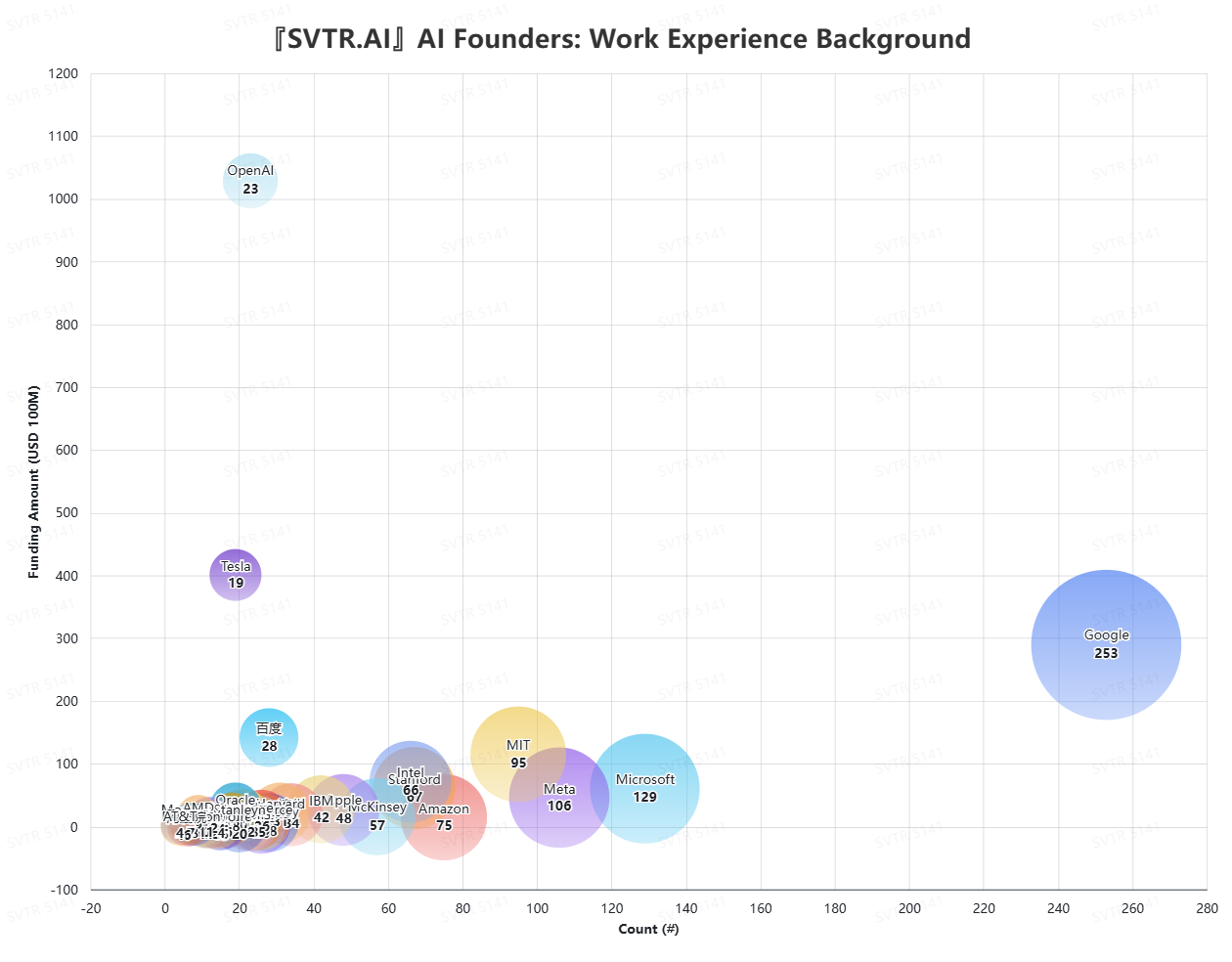
Google trains, OpenAI launches
On the career experience side, Google is by far the most common background among AI founders, with 253 alumni responsible for $40B+ in funding. These are engineers, researchers, and product leaders who have absorbed years of institutional know-how.
But the most shocking datapoint belongs to OpenAI: only 23 founders previously worked at OpenAI, yet their startups have raised over $100B USD combined. In other words, OpenAI has become a signal amplifier—its alumni have an outsize fundraising advantage.
CompanyFoundersFunding Raised (USD)Google253$40B+Microsoft129$20B+Meta106$18B+Amazon75$12B+OpenAI23$100B+Tesla19$40B+McKinsey34$10B+Baidu28$10B+
🧠 Insight: Working at OpenAI is not just a job—it’s a founder credential. Capital follows credibility, and the OpenAI brand delivers both.
What This Means for Founders and Investors
If you're a founder:
Your alma mater and employer do shape perception—especially among top-tier VCs who are optimizing for pattern recognition.
But outliers (e.g., Tsinghua, McKinsey, Tesla) show there are multiple viable paths into AI entrepreneurship, especially when paired with differentiated insight or networks.
If you're an investor:
Pedigree still matters, not as a deterministic factor, but as a proxy for founder readiness.
Look closely at the clusters—Stanford x Google, MIT x Meta, or OpenAI x Wharton—and ask: what new clusters are emerging?
Final Thought
In AI, the race isn’t always won by the best idea—but often by the most credible founder. Education and career backgrounds are fast becoming the new early-stage diligence layer.
Follow SVTR.AI for more founder data, AI startup intelligence, and venture trends.
🧾 Subscribe to get deep insights into the AI venture world
📊 From founder trends to startup financing maps, we decode what’s behind the rise of generative AI.