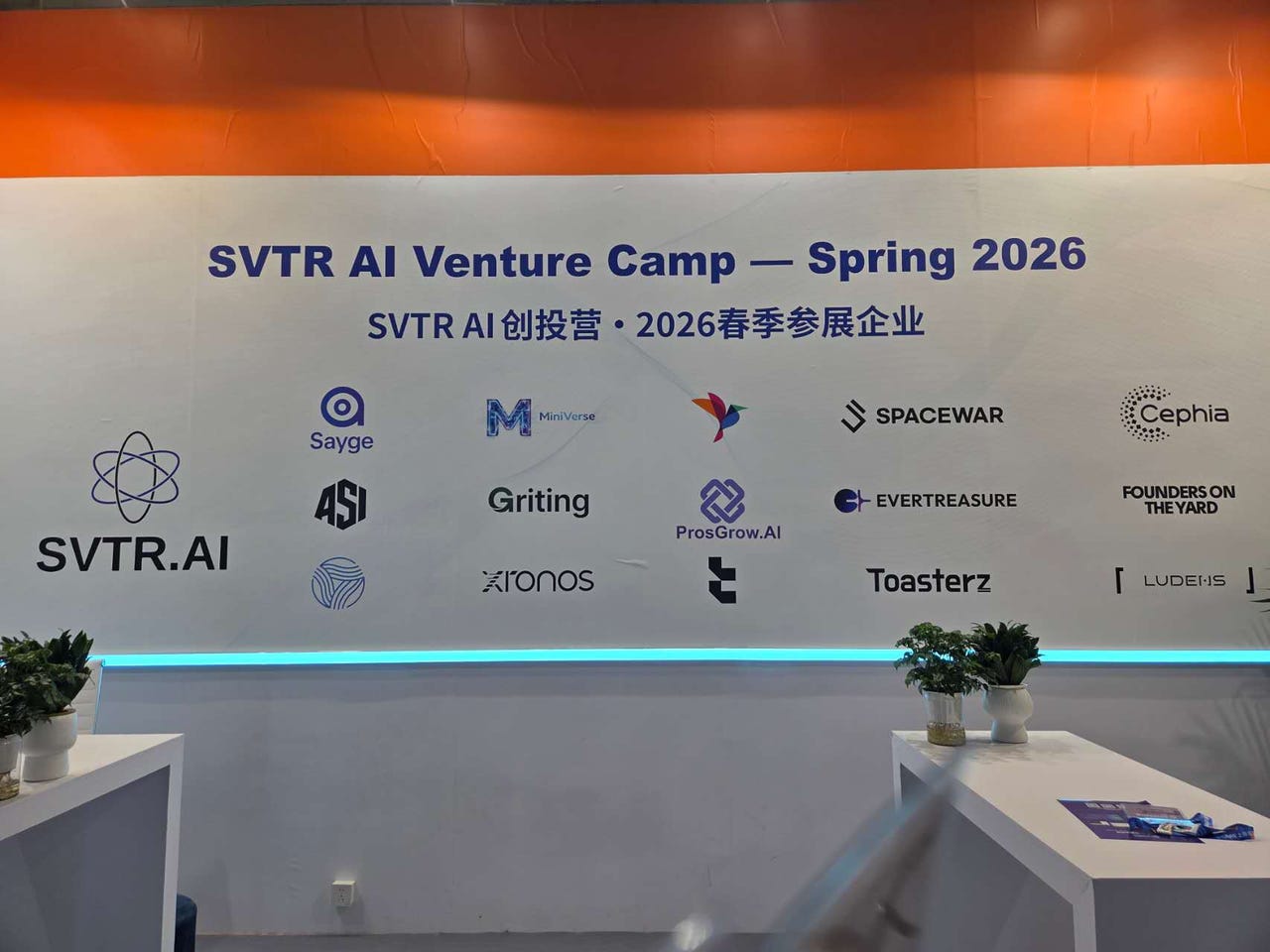
In March 2026, SVTR’s AI Venture Camp organized a Global AI Founders China Tour, bringing together more than 30 AI entrepreneurs from around the world, including Silicon Valley, for an intensive one-week visit across six representative innovation regions in China: AWE Shanghai, Suzhou Industrial Park, Xuhui ModelSpace, Shanghai Maqiao Artificial Intelligence Innovation Experimental Zone, Zhangjiang AI Town, and the Lin-gang Special Area.
These locations are not simply different urban districts or industrial zones. Each represents a distinct path of AI development within China’s broader innovation landscape. Taken together, they offer a more grounded way to understand Chinese AI—not only through the lens of individual companies or technical breakthroughs, but through the structure of the ecosystem itself.
After one week on the ground, our conclusion was clear: China’s AI competitiveness is increasingly not defined by a single company, a single model, or a single technological leap. It is being shaped by a more layered and coordinated innovation system.
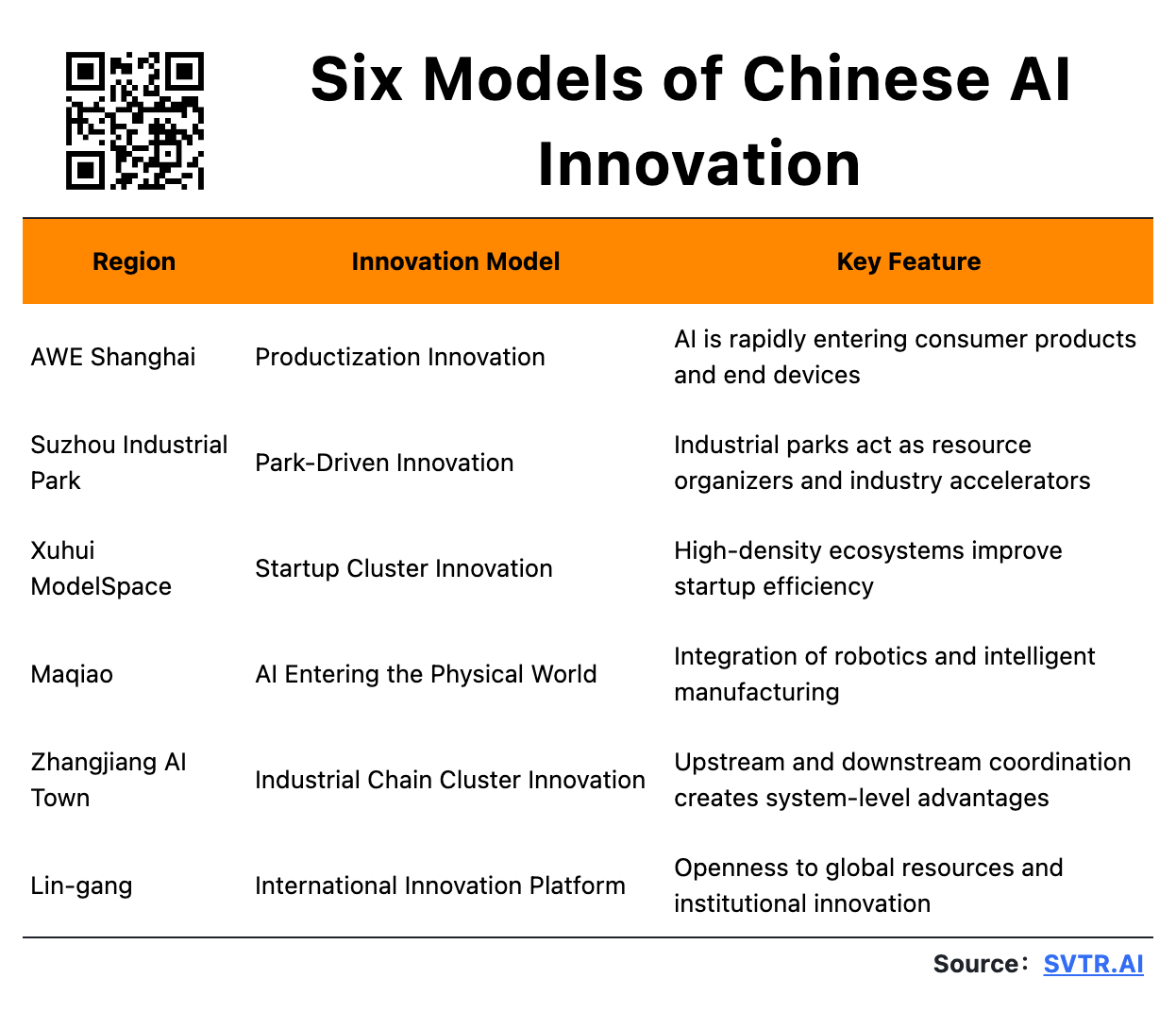
Based on this field visit, SVTR summarizes six emerging models of Chinese AI innovation.
1.
Productization Innovation: AI Is Entering Real Products Faster
At AWE Shanghai, one trend was immediately visible: AI is moving rapidly into consumer products and intelligent devices.
From AI-powered robots and home appliances to vision-enabled hardware and smart terminals, the deployment of AI in China is no longer confined to conceptual demos or software interfaces. It is increasingly embodied in tangible products entering the market at speed.
What this reflects is not just technical progress, but a structural advantage. China’s manufacturing depth, hardware ecosystem, supply-chain coordination, and large domestic market together create a shorter path from prototype to commercialization. In the AI era, that matters enormously.
This means China should not be understood only as an application market for AI. It is also becoming one of the most important environments for AI productization and large-scale market validation.
2.
Park-Driven Innovation: China’s Industrial Parks Function as Systems
Suzhou Industrial Park highlighted a model with distinct Chinese characteristics: park-driven innovation.
In many markets, innovation clusters are formed primarily through spontaneous concentration of talent and capital. In China, industrial parks often play a broader and more active role. They do not simply offer office space. They combine industrial planning, policy support, capital guidance, incubation, and supply-chain coordination into an integrated platform.
For AI startups, the value of this model is practical and immediate. It lowers the threshold between technical capability and commercial deployment. It reduces friction in areas such as customer access, pilot opportunities, regulatory navigation, and ecosystem connection.
In this sense, Chinese industrial parks are better understood not as real estate carriers, but as infrastructure for organizing innovation resources.
One of the strongest impressions shared by overseas founders on this trip was that Chinese AI development is often not just company-led innovation, but regionally coordinated innovation.
3.
Startup Cluster Innovation: Ecosystem Density Still Matters
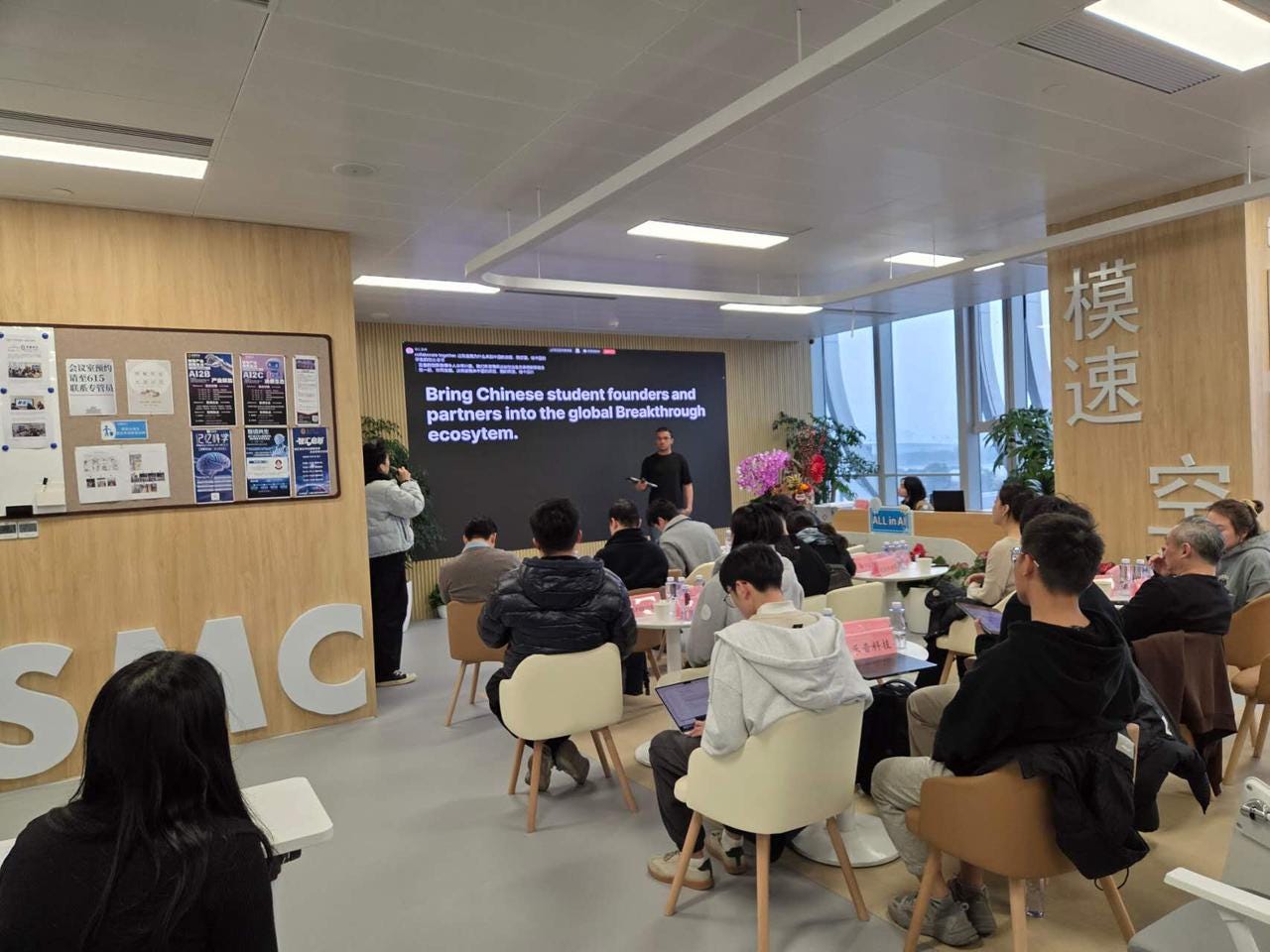
At Shanghai’s Xuhui ModelSpace, another important dynamic became clear: the efficiency created by high-density startup ecosystems.
In one concentrated environment, we saw AI startups, large-model teams, investors, researchers, and enterprise users interacting at high frequency. This kind of proximity produces real advantages: faster technical exchange, more efficient fundraising conversations, quicker product feedback loops, and stronger alignment between founders, capital, and market demand.
For AI, many of the most important opportunities still emerge through repeated offline interaction rather than purely digital connectivity. Teams that can more quickly access technical talent, customer signals, investor perspectives, and industrial resources tend to move faster in the early stages.
Several overseas entrepreneurs noted that this environment, in some respects, reminded them of Silicon Valley—not because the two ecosystems are identical, but because density itself creates momentum.
AI entrepreneurship is not only a competition of models and products. It is also a competition of ecosystem density.
4.
AI in the Physical World: Robotics and Intelligent Manufacturing Are Becoming Core Directions
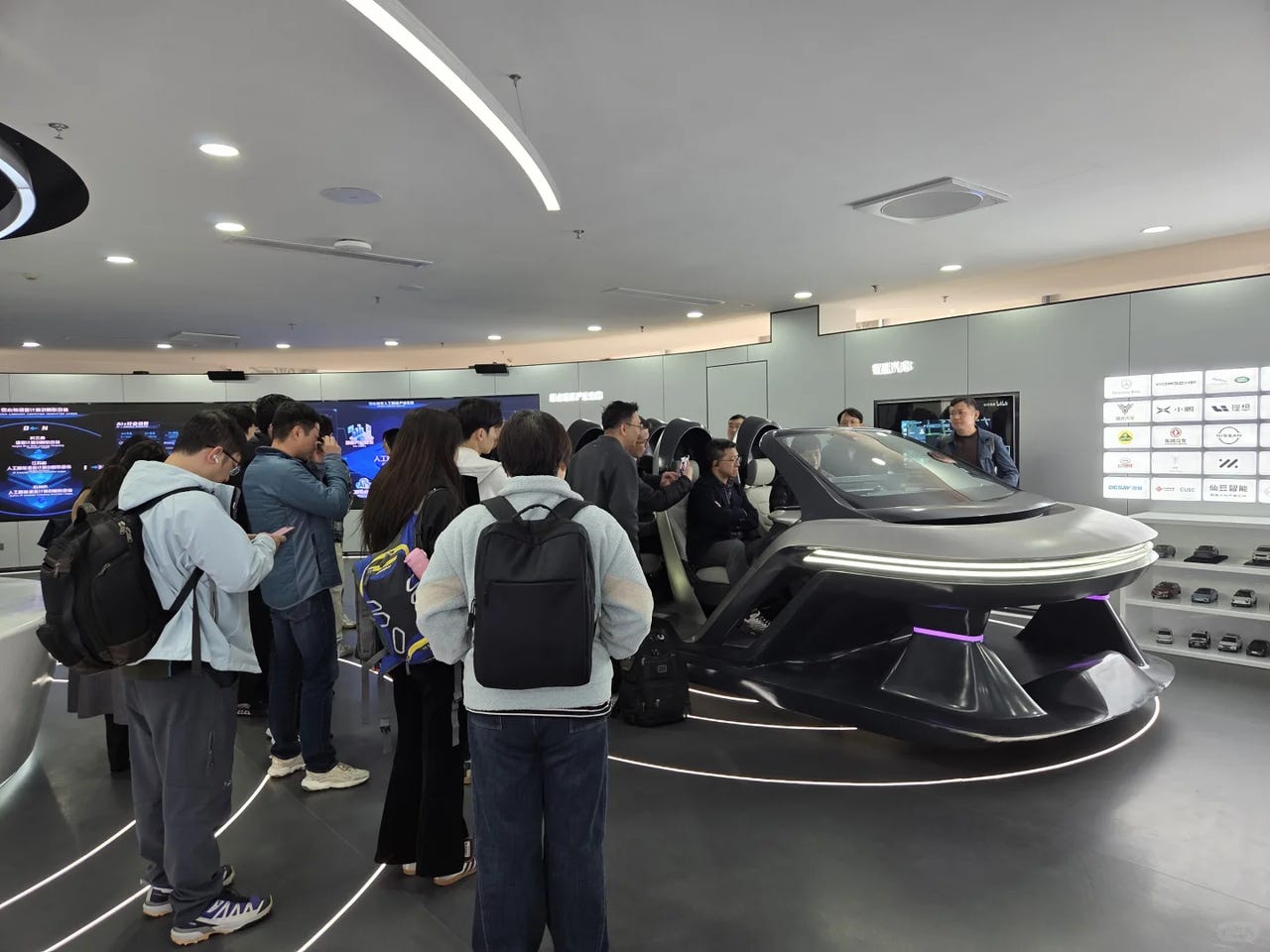
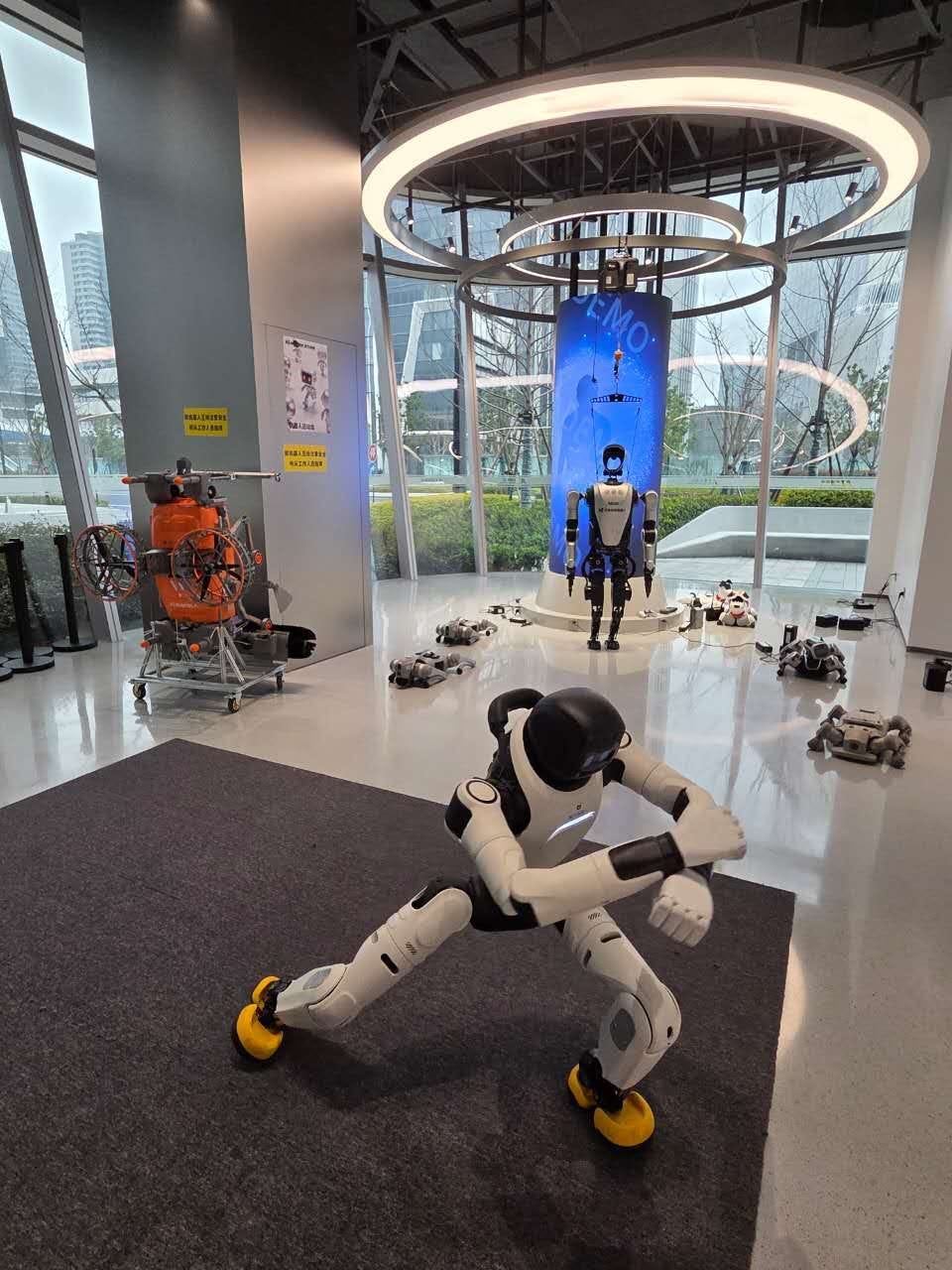
At the Shanghai Maqiao Artificial Intelligence Innovation Experimental Zone, another shift came into focus: AI is moving beyond the digital layer and into the physical world.
What stood out there was not only software or model capability, but a broader industrial ecosystem tied to robotics, intelligent manufacturing, logistics automation, and core components. This points to an important next phase of AI development.
If the previous wave of AI was centered largely on information processing and software workflows, the next phase is likely to depend much more on how AI integrates with machines, factories, infrastructure, and real-world operations.
China has clear advantages in this domain. Its manufacturing base, engineering capabilities, supply-chain depth, and large industrial deployment environments create conditions that are difficult to replicate elsewhere.
For that reason, robotics and intelligent manufacturing should not be seen as peripheral application areas. They may become one of the strongest long-term growth directions for Chinese AI in the global market.

5.
Industrial Chain Cluster Innovation: Coordination Across the Value Chain Is a Strategic Strength
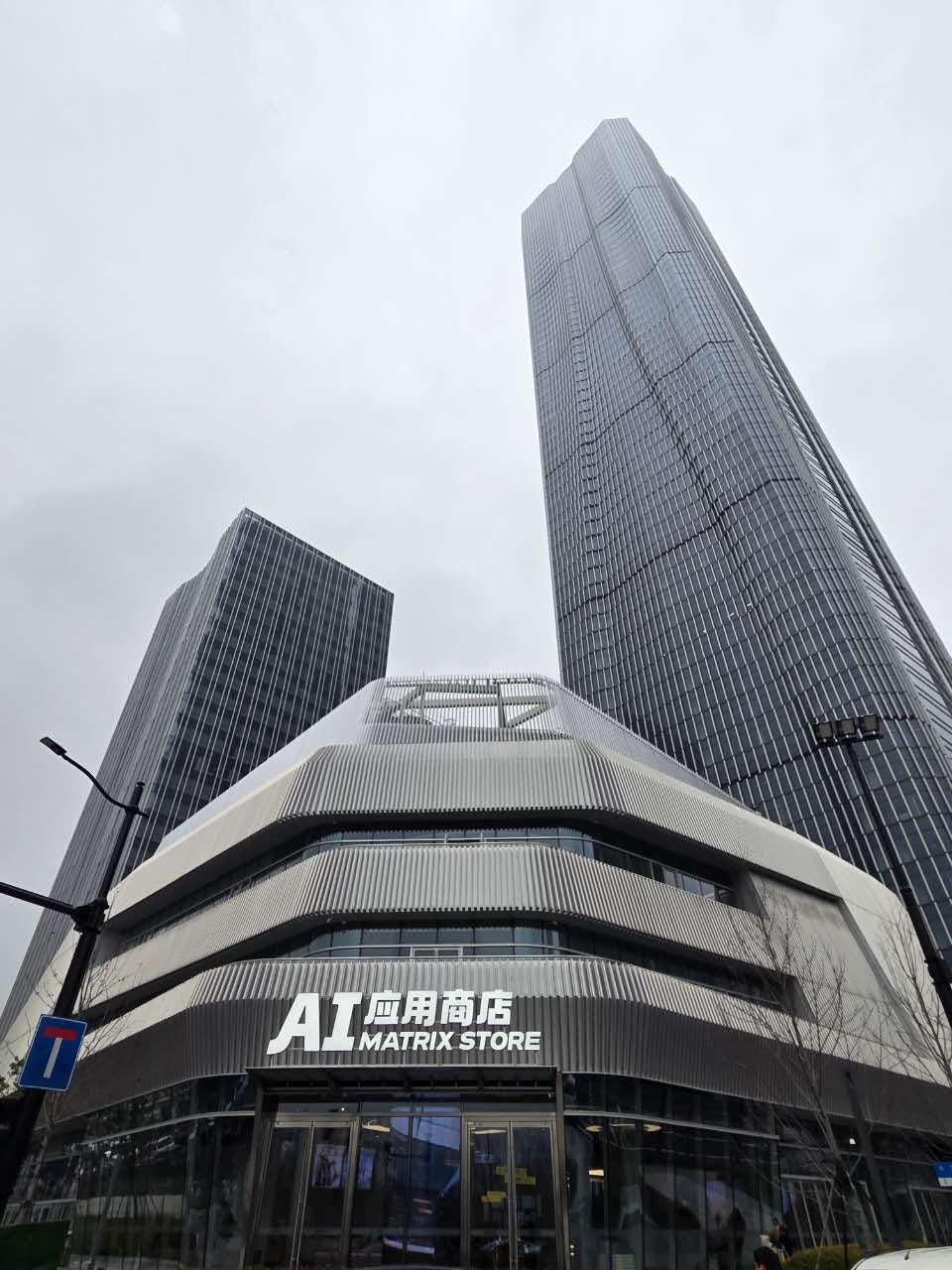
Zhangjiang AI Town illustrated another key feature of China’s AI ecosystem: industrial chain clustering.
What makes this model powerful is not dependence on a single standout company, but the co-location of multiple interdependent layers of capability. In one relatively concentrated geography, we observed AI chips, model platforms, robotics companies, smart hardware players, application teams, and supporting services beginning to form a more complete collaborative structure.
The significance of this kind of ecosystem is that it improves both efficiency and resilience. Innovation is no longer driven only by isolated excellence. It is accelerated by upstream and downstream coordination across R&D, testing, manufacturing, supply, channels, and customer integration.
For many international founders, this is one of China’s most compelling advantages. The attraction is not only market size, but the possibility of finding a workable cooperation chain more quickly and within a shorter operating radius.
As AI competition deepens, the real contest may increasingly be not between individual companies, but between ecosystems with different levels of coordination. From that perspective, industrial chain clusters represent one of the most important structural strengths of Chinese AI.
6.
International Innovation Platforms: Lin-gang Is Exploring a Global Interface for Chinese AI
The Lin-gang Special Area represented a more future-oriented model: the international innovation platform.
Compared with the other regions we visited, Lin-gang stood out for its emphasis on openness. Its development logic is closely tied to cross-border capital flows, global talent attraction, international business environments, and policy experimentation around global-facing innovation.
This matters because for overseas founders, entering China has never been a simple market-entry decision. It involves local networks, policy understanding, industrial partnerships, operational support, and long-term trust building. Regions that can absorb and connect international innovators more effectively will play a different role in the next stage of AI development.
In that sense, Lin-gang is not just serving local industrial growth. It is exploring how Chinese AI ecosystems can build more effective interfaces with the rest of the world.
That makes it not only a regional case study, but also a signal of where future institutional innovation may emerge.

7.
A Larger Judgment: China’s AI Advantage Is Becoming Systemic
Viewed together, these six models suggest a broader conclusion.
China’s AI development path is increasingly not about a single “point breakthrough.” It is about systemic innovation capacity.
That system includes the speed of productization, the organizing role of industrial parks, the efficiency created by high-density startup clusters, the integration of AI into physical industries, the coordination enabled by industrial-chain ecosystems, and the global-facing potential of more open innovation platforms.
This has broader implications for the global AI landscape.
A new division of labor may be taking shape. Frontier breakthroughs may continue to emerge from leading research centers around the world. But large-scale productization, industrial deployment, and real-world validation are increasingly tied to ecosystems with manufacturing depth, operational coordination, and policy support.
In that context, China’s role in AI is becoming clearer. Its importance lies not only in market size, and not only in application adoption. It lies in its ability to connect technology, industry, capital, infrastructure, and commercialization into a more integrated system.
The future of AI competition may therefore depend less on who has the strongest standalone model, and more on who can connect the strongest innovation systems.
One of the most important combinations to watch may be this: frontier technical capability from global research centers, combined with China’s industrialization and deployment capacity.
8.
Final Thought
This trip reinforced a view that is becoming harder to ignore: China’s AI competitiveness is increasingly a function of system capability.
Technology, manufacturing, capital, policy, industrial infrastructure, and international connectivity are no longer operating as separate layers. They are increasingly interacting as part of one larger engine.
For global founders, investors, and ecosystem builders, the opportunity ahead may not simply be to identify the next strong company. It may be to better understand how different AI systems work, where their strengths are complementary, and how new forms of cross-border cooperation can be built on top of that understanding.
That is one of the questions SVTR will continue to study through research, field observation, and long-term engagement across global AI ecosystems.
If you are a founder, investor, or ecosystem builder interested in joining SVTR’s global AI venture platform, you can apply here: