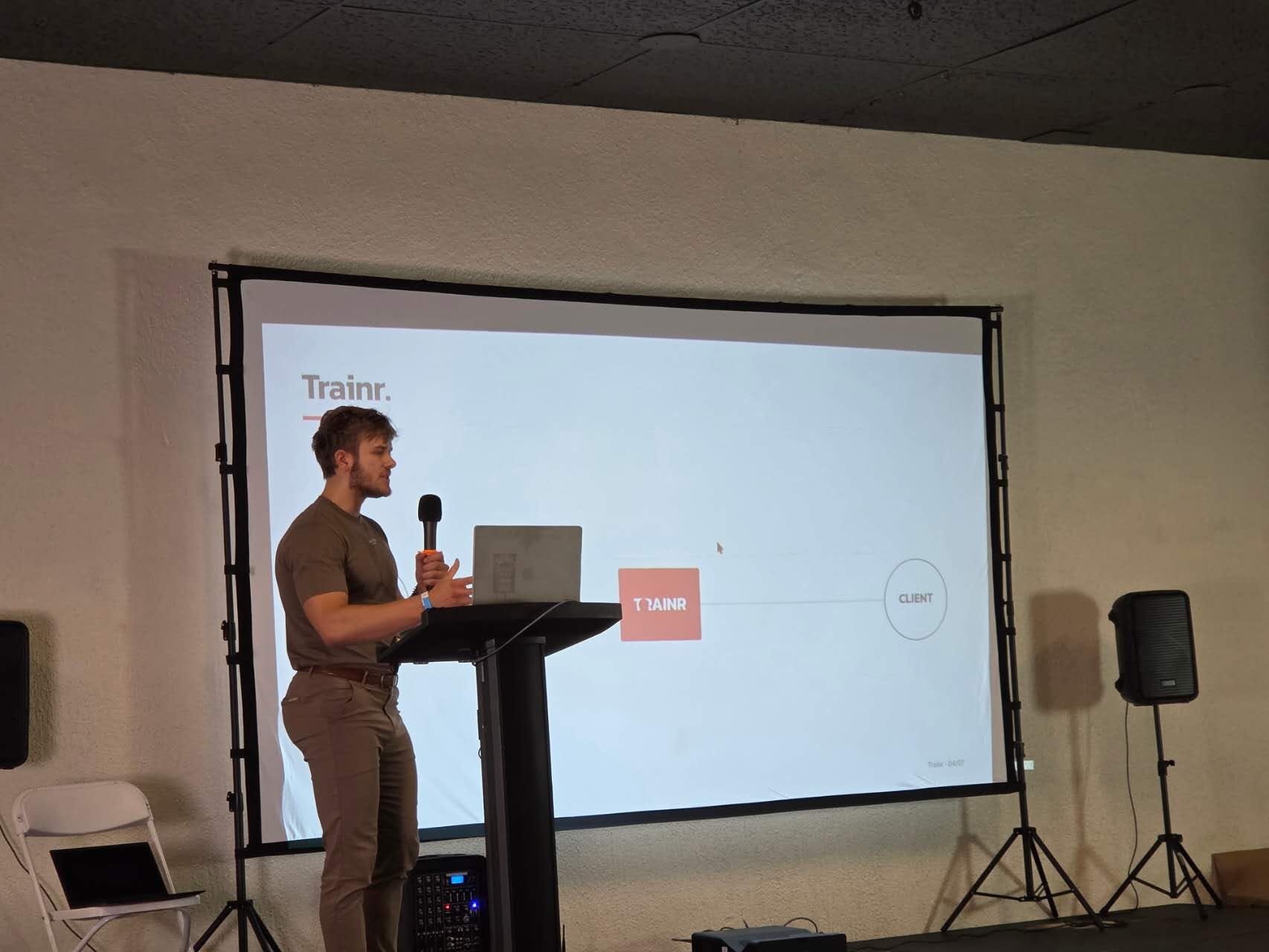
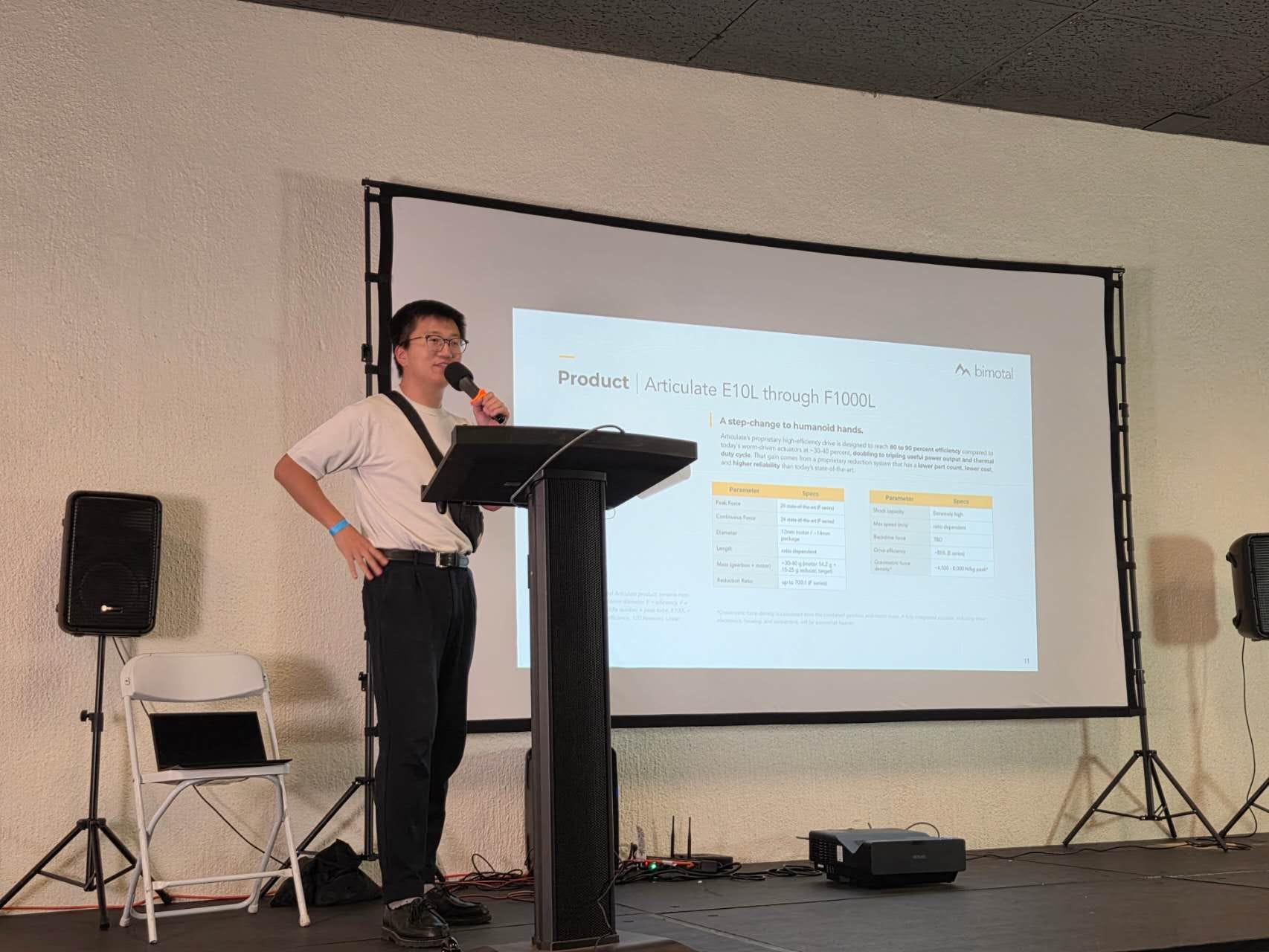
At our AI + Robotics session, ten teams took the stage one after another. Across more than two hours, not one was building a general-purpose humanoid. In a room convened around robotics, that absence was the most interesting thing in it.
The pitch ran on the main stage of Silicon Valley Robotics Fair 2026. An investor panel opened with its read, ten selected teams pitched for about ten minutes each, and the session moved into closed-door 1:1 matching afterward. Sort the founders by what they are actually building and the picture is clean: half are on consumer companion and wearable hardware, the other half on vertical-application intelligence. None are chasing the general-purpose humanoid-body arms race.
The panel put it plainly. Humanoids will reach factories in about two years and homes in about ten, driven by labor cost and technology readiness. But what already generates billions is vertical robots in industrial, logistics, and pharma-lab automation, plus self-driving cars and drones. The bubble risk sits on world models and newly minted frontier labs. Where the money is and where the story is do not yet overlap.
The most convincing pitches were not the flashiest. Emoka, a palm-sized emotional companion device, took 4M yen and 8,000-plus backers on day one of Japan’s Makuake. Bimotal, arguing actuators are nearly half the cost of a robot, co-developed an iron-nitride motor with NARA Magnetics and is already shipping in mobility. Tyce, using agents for pre-construction bidding, helped one contractor catch a $500K scope gap. (All are the founders’ own on-stage accounts, not yet independently verified.) The lesson is the other side of the panel’s line: what convinces is not the flashiest technology, but chewing one concrete problem down to the point where someone pays real money for it.
Our read: value in this wave of robotics is shifting from who can build the most human-like body toward who locks up key components like actuators, who puts AI inside a real vertical use case, and who reaches cash flow first with companion hardware. These positions share being closer to revenue and further from the body arms race, which lands squarely on the panel’s read that vertical robots already make money while humanoids still need two more years. For early-stage funds looking at robotics, that is where to move some attention.
Read the full field notes.